


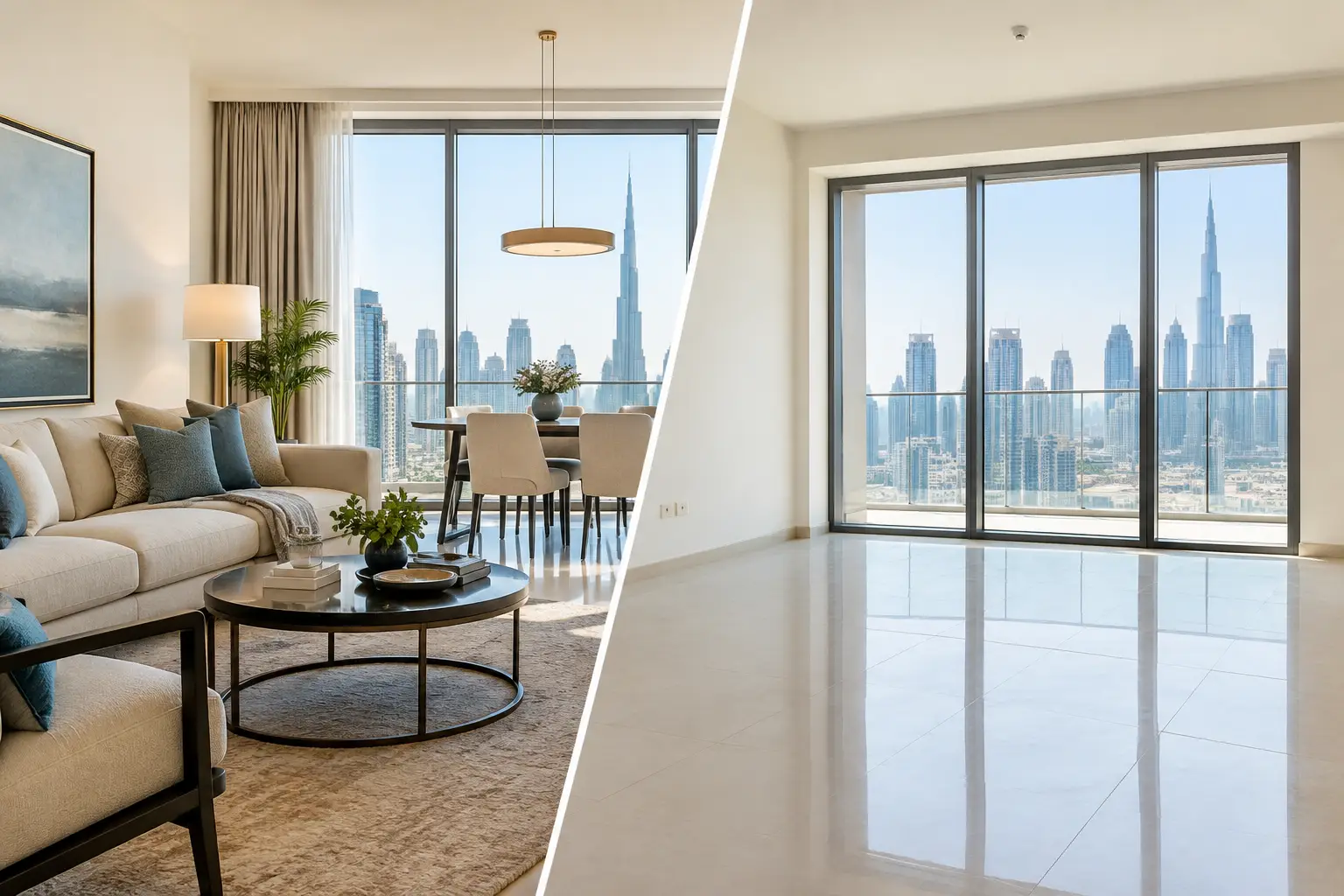
A Dubai rental can look ideal online, then feel very different once you calculate furniture, utility setup, lease flexibility, and the cost of moving again. The decision between furnished versus unfurnished rentals is not simply about whether a home has a sofa and a bed. It is about matching the property, lease structure, and total cost to the way you plan to live in Dubai.
For a professional arriving for a one-year assignment, a furnished apartment may offer an efficient start. For a family relocating for several years, an unfurnished villa may provide better value and a more personal long-term home. The right choice depends on your timeline, budget, household needs, and the quality of what is actually included.
Furnished Versus Unfurnished Rentals: The Core Difference
A furnished rental is generally ready for immediate occupancy. It commonly includes major furniture, kitchen appliances, beds, seating, dining furniture, window coverings, and basic lighting. Some properties also include cookware, linens, televisions, smaller appliances, and kitchenware, although this varies significantly from one listing to another.
An unfurnished rental usually provides the built-in essentials: fitted kitchen cabinets, bathrooms, wardrobes, air conditioning, and major appliances in many newer Dubai properties. However, it may not include loose furniture such as beds, sofas, dining sets, rugs, lamps, or curtains. In some cases, even appliances are absent, so the listing and viewing should confirm exactly what remains.
There is also a middle ground. A semi-furnished property may include white goods and selected fixed or loose items, but not enough to move in without additional purchases. This category can work well for tenants who already own some furniture, but it requires particularly careful inventory checks before signing.
When a Furnished Rental Makes Sense
Furnished homes are often the practical choice for tenants who value speed and convenience. They can reduce the number of decisions required during a relocation, especially for overseas clients arranging a move before arriving in the UAE.
A furnished apartment may be well suited to a short professional assignment, a first year in Dubai while you learn the city, or a tenant who expects to travel frequently. It can also be a sensible option for someone moving from abroad with limited household belongings. Instead of arranging delivery, installation, and future resale of furniture, you can focus on settling into the community and establishing daily routines.
The financial benefit is strongest when the lease is relatively short. Buying quality furniture, appliances, and household items for a 12-month stay can be more expensive than paying a reasonable premium for a properly equipped home. Furnished properties can also be valuable when immediate move-in is important and you do not want to wait for deliveries.
That said, “furnished” does not automatically mean “fully equipped to your standard.” Furniture quality, style, maintenance, storage, kitchen equipment, and mattress condition can vary widely. A well-presented apartment should still be assessed as carefully as an unfurnished one.
What to Check Before Renting Furnished
Ask for a detailed inventory that identifies the furniture, appliances, and accessories included in the tenancy. During the viewing and handover, verify the working condition of appliances, air conditioning controls, water heaters, televisions, internet connections where applicable, and any smart-home systems.
Photographs and written notes are useful for recording existing marks, worn upholstery, chipped furniture, or appliance issues. This protects both tenant and landlord when the tenancy ends. Clarify who will repair or replace an item that fails through normal use, and ensure that any agreed repairs are documented before move-in.
Storage deserves attention as well. A furnished home can become impractical if wardrobes are full, cupboards are occupied by the owner’s belongings, or there is no room for luggage, work equipment, or children’s items. For families, usable storage often matters more than decorative furniture.
Why Unfurnished Rentals Can Offer Better Long-Term Value
Unfurnished rentals tend to appeal to tenants planning to remain in Dubai for multiple years. The initial setup requires more effort, but the home can be configured around your routines rather than around the landlord’s existing furniture.
This is particularly relevant for families, homeowners moving from another UAE property, and professionals who have already built a household in Dubai. You can choose furnishings that suit your lifestyle, whether that means a dedicated home office, larger dining area, child-friendly layout, or higher-quality mattresses and seating.
In many cases, the annual rent for an unfurnished home is lower than a comparable furnished unit in the same building or community. The exact difference depends on the location, property condition, furnishing quality, and market demand. Over a longer tenancy, the lower rent can offset the upfront cost of furnishing the property.
An unfurnished home can also feel more stable. You are less constrained by a landlord’s design choices and less concerned about potential deductions for wear on their furniture. However, tenants should budget realistically for the setup. Furniture, appliances, curtains, delivery charges, installation, and eventual moving costs can add up quickly.
The Upfront Costs to Plan For
Before choosing an unfurnished rental, estimate the full setup cost rather than focusing only on the annual rent. At minimum, consider beds and mattresses, seating, dining furniture, kitchen equipment, curtains or blinds if needed, small appliances, and home-office requirements.
You should also account for the time involved. Even when furniture can be delivered quickly, coordinating deliveries, assembly, access permits, and elevator bookings may take several days. Some buildings and communities have specific move-in procedures that should be arranged in advance.
For tenants who expect to leave Dubai within a year, resale or relocation is another consideration. Quality furniture can retain value, but selling multiple items before an international move takes time. If your plans are uncertain, a furnished home may provide more flexibility despite the higher rental cost.
Compare the Total Cost, Not Only the Rent
The most useful comparison is not furnished rent against unfurnished rent in isolation. It is the total expected cost of living in each property over the intended lease period.
Start with the annual rent and payment schedule. In Dubai, rental payments may be structured in one or several checks, depending on the landlord and property. Then add the security deposit, brokerage fee where applicable, utility activation, internet, moving costs, and any building access or administration charges. For an unfurnished home, include the furniture budget. For a furnished home, consider whether you may need to supplement what is provided.
Also compare like for like. A furnished apartment may command a premium because it is newly renovated, includes better appliances, or is located in a more convenient part of the community. A lower-priced unfurnished option may need substantial spending before it reaches the same standard. Looking at floor plan, condition, views, parking, amenities, maintenance history, and actual included items creates a more accurate decision.
Lease Terms and Handover Matter in Both Cases
Whether a property is furnished or unfurnished, the tenancy contract should clearly identify the property, rent, payment dates, security deposit, maintenance responsibilities, notice provisions, and renewal terms. Make sure verbal commitments are reflected in writing, particularly if the landlord has agreed to add, remove, repair, or replace furniture or appliances.
At handover, document meter readings, keys, access cards, parking remotes, and the condition of the property. For furnished homes, the inventory should be attached to or referenced by the agreement where possible. For unfurnished homes, confirm which appliances, fixtures, and fittings are included, as assumptions can create disputes later.
Tenants should also understand the practical difference between routine maintenance and major repairs. Lease terms can vary, and clear expectations before move-in help avoid uncertainty when an appliance, plumbing fixture, or air conditioning component needs attention.
Choosing the Right Option for Your Dubai Move
Choose furnished when your priority is a quick start, minimal setup, short-term flexibility, or avoiding the cost and logistics of buying furniture. Choose unfurnished when you expect to stay longer, want control over your living environment, already own furniture, or can benefit from a lower annual rent over time.
There is no universal winner. A well-priced furnished apartment can be excellent value for a new arrival, while an unfurnished townhouse can be the stronger choice for a family building a longer-term life in Dubai. The key is to inspect the actual property, calculate the complete cost of occupancy, and align the lease with your expected plans.
A knowledgeable advisor can help you compare suitable options within the same community, identify what is genuinely included, and review the practical details before you commit. JK Properties supports tenants with market-based shortlists and clear guidance so the home you choose works not only on viewing day, but throughout your tenancy.

